

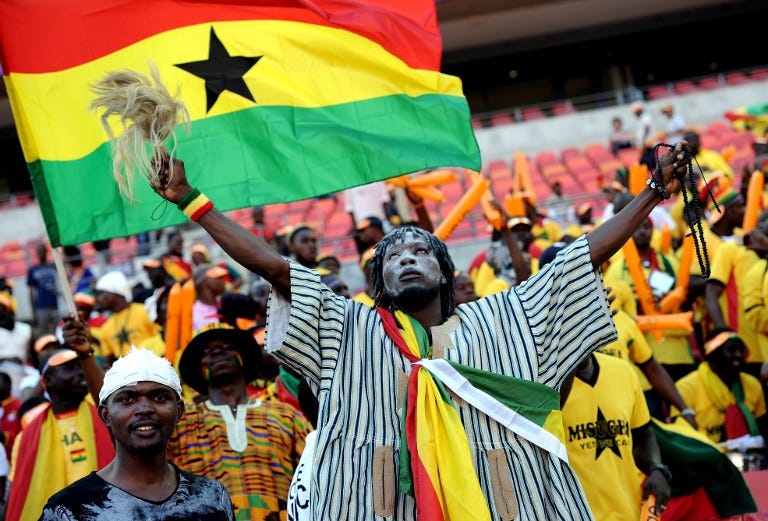
There is a number buried inside this World Cup that almost no one is talking about, and it tells you more about the next fifty years than any final score ever will.
Ten. Ten African nations arrived in North America this summer. For the first time in the tournament’s near century of existence, the continent crossed into double digits. Algeria, Cape Verde, Côte d’Ivoire, DR Congo, Egypt, Ghana, Morocco, Senegal, South Africa, and Tunisia. Nine of them advanced out of the group stage and into the knockout round of 32. At Qatar four years ago, Africa sent five. The previous record, set when South Africa hosted in 2010, was six.
I watch football the way I read a balance sheet. And when I look at this field, I do not see a sporting event. I see a leading indicator.
The league expanded, and the gate came off
The obvious explanation is that the tournament grew. This is the first 48-team World Cup, up from 32, and more seats meant more nations. True. But look closer at how the new seats were distributed, because that is where the real story lives.
Africa’s direct allocation nearly doubled, from five slots to nine, plus a playoff berth the continent then went out and won. For a landmass of fifty-four nations and roughly 1.5 billion people, five was never a measurement of talent. It was a measurement of who wrote the rules. When you cap a continent’s representation for decades and then lift the cap and the teams come flooding through on merit, the shortage was never the players. The shortage was the invitation.
That is the part that should make anyone who works in capital sit up straight. Because the same dynamic governs boardrooms, index funds, sovereign debt markets, and the allocation of global attention. The talent was always there. The gate was the constraint.
Who owns the stadium
For most of the modern era, the game has been organized around a familiar roster of powers. The United States and the United Kingdom have functioned less like teams and more like the owners of the stadium. They built the arena, wrote the rulebook, appointed the referees, and enjoyed a home field advantage that had nothing to do with the grass. The dollar was their captain. The City of London kept the ledger. Everyone else was invited to play, so long as they understood whose house it was.
A field is a census. It is one of the only moments when the world’s nations show up in the same place, under the same rules, and agree to be counted. And this census is registering something the incumbents have been slow to say out loud: the roster of serious competitors is getting longer, and the newcomers did not ask for a wildcard. They qualified.
Watch how the other established powers are behaving, too. China has spent two decades quietly recruiting across the same continent, financing the ports, rails, and stadiums, positioning itself as the patron of players everyone else took for granted. The rivalry over Africa is no longer a question of who assists it. It is a question of who can keep up with it.
The numbers nobody wants to run
Here is the argument I have been building in my next book, and the reason this tournament reads to me like a preview rather than a pastime: the future of work is African. Not as a development slogan. Not as charity. As arithmetic.
By 2050, roughly one in four people on earth will be African. The median age across the continent sits near nineteen, at a moment when much of Europe and East Asia is aging into a demographic winter. The workforce of the century is being born right now, and it is being born in Lagos, Nairobi, Accra, Kinshasa. When the labor, the consumers, the founders, and the innovators of the coming decades are concentrated on one continent, the flows of capital and legitimacy eventually follow. They always do. Markets are late, but they are not blind.
A World Cup field is what that shift looks like before the spreadsheets catch up.
Read the roster
Consider Cape Verde. A nation of roughly half a million people, smaller than a single American suburb, out-competing rivals a hundred times its size and becoming the smallest country ever to reach the knockout stage, on its tournament debut. That is not a fairy tale. That is what happens when a small, well-run, diaspora-connected nation stops accepting that size determines ceiling. Every incumbent knows the type. It is the competitor nobody scheduled for.
Consider Morocco, semifinalists four years ago, who beat Belgium, Spain, and Portugal on that run and are still standing in this one. The ceiling everyone assumed was permanent turned out to be a temporary arrangement. Consider South Africa, back on the biggest stage since it hosted in 2010, handed the honor of opening the entire tournament against a host nation. Consider DR Congo, competing on football’s largest platform for the first time since 1974. These are not underdogs wandering into someone else’s tournament. They are a rising bloc that showed up in force.
And notice this: Africa is not one team. It is a league of ascending competitors, rivals to one another on the pitch, increasingly teammates in the larger contest over where the world’s talent, capital, and attention will concentrate. That is precisely how economic power blocs behave. Internal competition, external gravity.
What sport reveals
The reason so few people read the tournament this way is that we are trained to separate the serious from the symbolic. Sport is supposed to be the toy department of life, a place to feel things and then return to the real work. But every dominant franchise eventually learns the same lesson, and it is a lesson about power, not play: expansion changes the game. More competitors on the field means the trophies get harder to hold. The incumbents are about to relearn it.
So watch the goals if you like. Enjoy the brackets, the upsets, the penalties in the final minute. I will be watching the composition of the field, because the field is the tell. Right now it is telling us that the fastest-rising bloc of this century did not beg for a seat. It earned ten of them, in numbers no one can wave away, on a stage the whole world agreed to watch.
The scoreboard everyone is staring at will be forgotten by August. The one I am reading is just getting started.
A note, since we are on the subject of where the world is heading.
This August, I am gathering a small group on Martha’s Vineyard to sit with exactly these questions in person. Founders, allocators, policy minds, and creatives who are already moving capital and talent toward the future this essay describes. It is an evening for the kind of conversation that does not happen on a public scoreboard. If this is the work you are doing, or the world you are trying to build, I would love to hear from you.
More soon,
Dr. Rachel
Yes! Again I say, yes! Keep the wisdom coming.
Ase.