

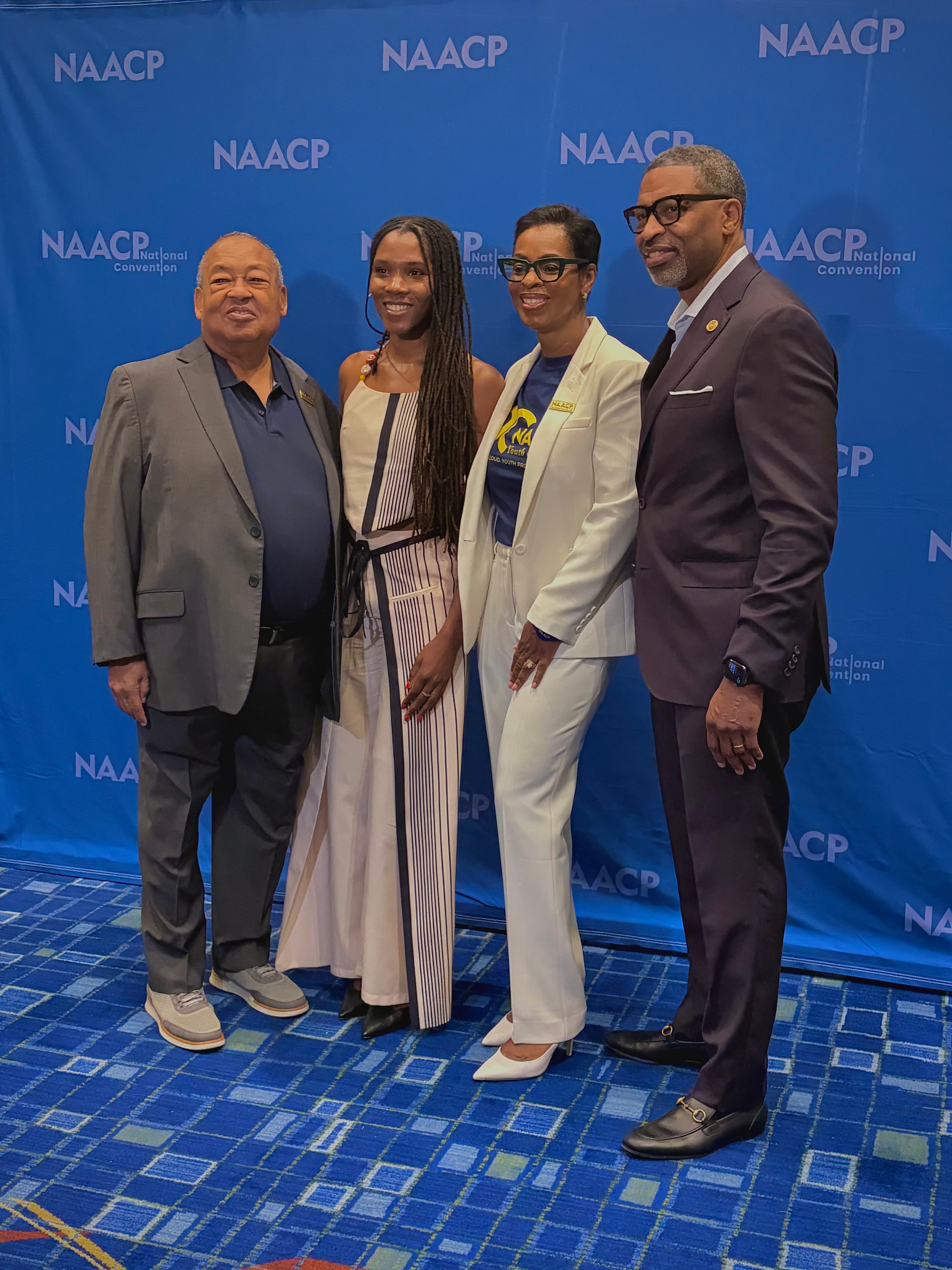
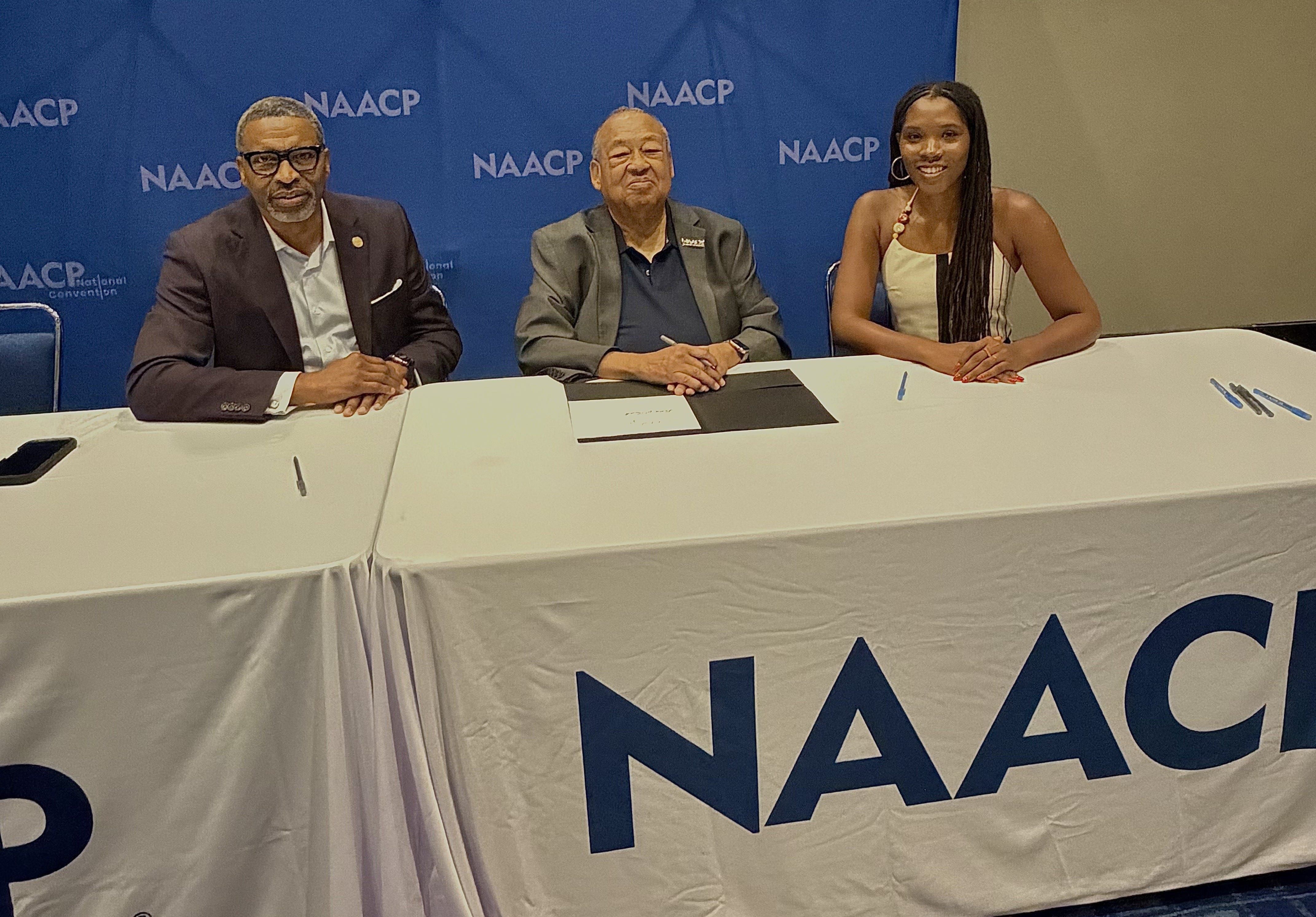
On Saturday, July 18, in a room at the NAACP’s annual convention, I signed a Memorandum of Understanding alongside Derrick Johnson, President and CEO of the NAACP, and Leon W. Russell, Chairman of its National Board of Directors. The agreement establishes a strategic alliance between Black Capitalists and NAACP Capital, the venture capital platform of the nation’s oldest and largest civil rights organization. It is the first partnership of its kind for the NAACP, and it is the most consequential signature Black Capitalists has put to paper.
I want to sit with the weight of that for a moment, but I also want to name the feeling in that room, which was joy. This is a milestone and a celebration at once, and I spent the weekend holding both.
The NAACP was founded in 1909. For one hundred and seventeen years it has been the institution our people turn to when the promise of this country needs to be enforced rather than merely recited. Its mission has always named economic security alongside political rights and social inclusion, but history kept assigning it emergencies: the courtroom, the ballot box, the schoolhouse door. What struck me all weekend at the convention was watching an institution built for defense turn deliberately toward construction, toward the question of what Black people can own, build, fund, and pass down. NAACP Capital exists to invest in founders and funds solving the biggest challenges facing overlooked communities. That is not a departure from civil rights work. It is its maturation.
Black Capitalists exists for a kindred reason. I built this platform, the book, the newsletter, the convenings, on a conviction that I have carried through every room I’ve argued it in: the conversation about Blackness and capitalism cannot remain a nonstarter. The message so often arrives pre-packaged, resist the system, be anticapitalist, full stop, as if our only permitted relationship to capital is refusal. But refusal is not a wealth strategy, and it has never funded a single institution that outlasted us. The more honest project is participation with intention. Ownership as a form of memory. Capital as something that can be metabolized differently depending on whose hands it passes through and what those hands remember.
So when the chairman, the president, and I put our names on the same page, what we were really signing was a shared answer to an old question: economic power is civil rights work, and civil rights work must now include the deliberate building of a Black Capitalist ecosystem, an infrastructure of entrepreneurs, investors, institutions, and ideas in circulation with one another, in this country and across the diaspora. This is what I mean when I talk about Pan-African economic empowerment. Not sentiment about the homeland, but working bonds between it and us: relationships that move capital, knowledge, and opportunity in both directions.
What the partnership holds
I will spare you the legal language, because the spirit of the agreement matters more than its clauses. At its heart, this alliance commits both of our institutions to building together: programming and resources that advance Black entrepreneurship, financial literacy, youth empowerment, and economic justice, carried into the NAACP’s member, chapter, and community networks in every corner of this country. It pairs the reach and moral authority of a century-old institution with the ideas, community, and capital-in-motion of the Black Capitalists platform, and it binds us to showing up for one another’s work visibly and consistently, starting now.
I write this as much to document as to announce. So much of Black institution-building has gone unrecorded, and keeping our own record is part of the practice: naming what we intend, in public, so that it can be built upon and remembered.
The anchor: August 17 on Martha’s Vineyard
Every alliance needs a room where it becomes real. Ours is Black Capitalists: The Vineyard Convening, on Monday, August 17, from 6 to 11pm on Martha’s Vineyard.
Some of you were with me on June 29 in Manhattan, at our dinner with His Royal Majesty the Ga Mantse, Nii Tackie Teiko Tsuru II, King of Accra. I said that evening was a beginning, not an ending, and the Vineyard is where I make good on that. The convening carries the same purpose forward: to revitalize Pan-Africanism, to strengthen the bonds between the homeland and the diaspora, and to turn honest conversation into real connection, and connection into the relationships and capital that move our shared work ahead.
This year, the NAACP will be in that room, on that stage, as our partner. A one-hundred-and-seventeen-year-old civil rights institution and a young platform built to inspire Black thriving in capitalist economies, together on an island that has held generations of Black aspiration, leisure, and wealth. I can think of no better place to begin. And I want to be clear about the register of the evening: we will do serious work on the Vineyard, and we will enjoy ourselves while doing it, because gathering well has always been part of how we build.
Details and registration are here: Black Capitalists: The Vineyard Convening. If you know someone who belongs in this work, share it with them. That is how ecosystems grow: not by gatekeeping, but by invitation with discernment.
What I am asking of you
Institutions do not change the material conditions of a people. Ecosystems do. A signature on an MOU is only as historic as what gets built underneath it, and what gets built underneath it is, in large part, you: the entrepreneurs, the corporate strategists, the investors, the creatives, the readers who have found footing in the nuance of this work. This partnership creates the structure, but it is the people working within it who will determine what it amounts to.
So here is the ask, plainly. Be in the room on August 17 if this work speaks to you. If you cannot be, share the convening with someone building something worth funding. And when the programming from this partnership reaches your chapter, your company, or your inbox in the months ahead, engage it and bring your vantage point with you, because the ecosystem only works if it holds all of them.
One hundred and seventeen years ago, a small group of people decided that Black life in America required an institution equal to its ambition. This past Saturday, that institution and this platform decided that Black wealth, here and across the diaspora, requires the same. I signed my name to that proposition gladly. On August 17, on the Vineyard, we celebrate it, and we get to work.
More soon,
Dr. Rachel
As incredible as it is inevitable that you would be here! What an amazing thing to have the privilege of following along over the last few years! 🫶🙌
Fantastic!